
THE ROWAN HALL METHOD
Technique first, trophies second
Most academies chase early results. We build strokes that survive pressure, which means slower progress at eight and much faster progress at fourteen. This is how that works, session by session and term by term.
PHILOSOPHY
Four things we will not trade away
Rowan Hall has coached from the same syllabus since 1988. It has been revised eleven times, but the principles underneath it have not moved: a player is built, not selected, and the work that matters is rarely the work that wins this weekend.
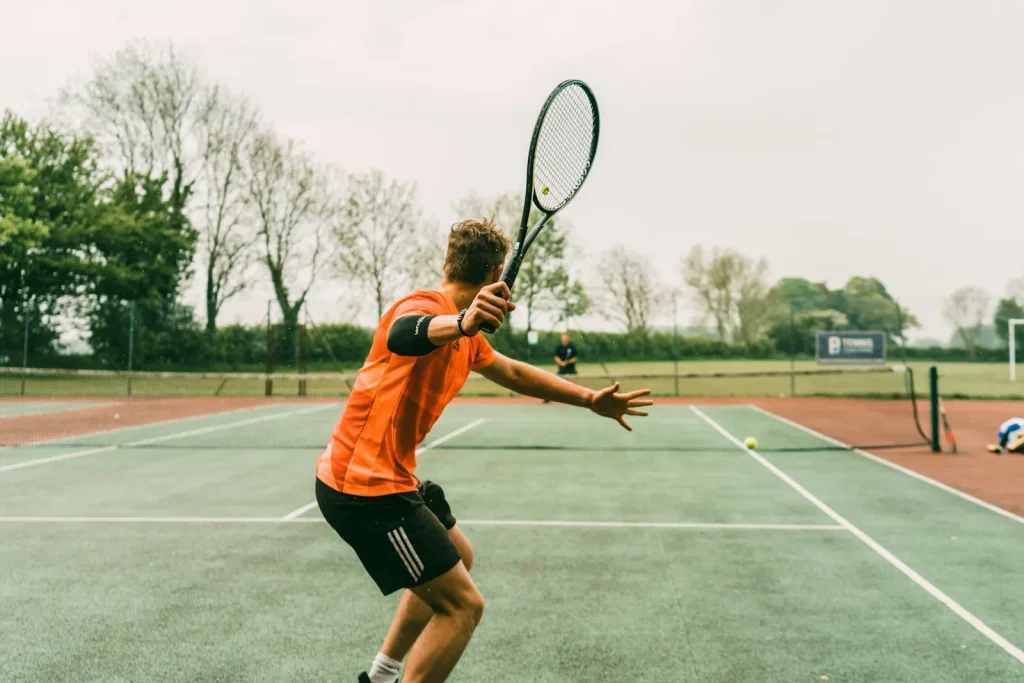
Technique before results
A stroke built to survive pressure takes longer to learn than one built to win under-tens matches. We accept slower progress at eight for much faster progress at fourteen.
One syllabus, twelve courts
Every coach teaches the same swing shapes from the same written syllabus, so a change of coach or group never means starting over.
Assessed, not auditioned
No player is placed from a video or a ranking. A senior coach watches a full session before any squad decision is made.
The player owns the plan
From twelve, players write their own term goals with their coach and read their own review. Nobody is coached at.
ASSESSMENT
Nobody is placed from a ranking
Four steps between an enquiry and a first session. The written assessment is yours to keep, whether or not the player joins.
Enquiry
You tell us the player’s age, standard and how often they want to train. We reply within two working days with a session to attend.
On-court session
Ninety minutes with a senior coach: rally tolerance, serve, movement, and how the player behaves when a drill gets hard. Parents watch from the loggia.
Written assessment
Within a week you receive a written assessment — technical notes stroke by stroke, a physical screen, and the group we recommend.
Placement and start date
A place is offered with a schedule, a fee and a start date. Players entering squads or the elite programme attend a trial block or an assessment week first.
DEVELOPMENT STAGES
Five stages, one syllabus
A player moves stage when the checkpoints are held under a live ball, not at a birthday.
Stage 1 · Red
What we coach
Rally on the first day. Send, receive and score a point without an adult feeding.
Leaving the stage
Serves underarm, rallies ten balls cooperatively, plays in-house festivals.
Stage 2 · Orange
What we coach
Build the swing shapes that will not be rebuilt later: unit turn, low-to-high, split step.
Leaving the stage
Rallies from the baseline, serves overarm, enters county orange events.
Stage 3 · Green
What we coach
Full-court movement and the first tactical patterns. Recovery position becomes automatic.
Leaving the stage
Plays green-ball competition, holds a rally under pressure, first LTA rating.
Stage 4 · Yellow
What we coach
Own game style identified. Serve and forehand become weapons; second serve is trained daily.
Leaving the stage
County standard, eight to twelve tournaments a year, LTA rating below 9.
Stage 5 · Performance
What we coach
Match craft, physical durability and the ability to plan and review a tournament year.
Leaving the stage
National ranking, ITF or college pathway, LTA rating below 5.
FOUR STRANDS
What every session is made of
Technical, tactical, physical and mental work appear in every week of every programme. The balance shifts with the stage; the four never drop to zero.
TECHNICAL
Strokes built to last
Technique is taught from a written syllabus rather than a coach’s preference. Every stroke has defined checkpoints — grip, unit turn, contact point, finish — and a player is not moved on until they hold under a live ball, not just a feed.
- Video capture every half-term, reviewed with the player
- Serve is the only stroke trained in every single session
- Corrections made one at a time; never more than one cue per drill
- Left-handers and one-handed backhands coached, not converted
TACTICAL
Patterns before plans
From green ball onward, players learn five patterns of play and when each one applies. By fourteen, a player can name their game style, their two best patterns, and the pattern they lose with — and so can their coach.
- Five core patterns taught in the same order across all groups
- Match charting from twelve: first serve, errors, patterns won
- A written game-style statement reviewed each term
- Opponent scouting taught from fifteen, not before
PHYSICAL
Movement, then power
Strength and conditioning starts at eleven with movement quality and landing mechanics, not weight. Load is planned around the tournament calendar so peak training never lands in a competition week.
- Physio screening each term, results shared with parents
- Two S&C sessions weekly for squads, six hours for elite
- Growth monitored; load reduced during rapid growth phases
- Recovery is scheduled, not optional — two rest weeks in August
MENTAL
Composure is coachable
Players are taught a between-point routine before they are taught to win. We coach the response to a bad line call, a lost set and a long rally, and we grade behaviour in match play the same way we grade a forehand.
- Between-point routine taught from green ball
- Behaviour scored in every match-play session
- Sports psychologist on site fortnightly for squads and elite
- Losses reviewed the next day, never on the court
COMPETITION
We enter to learn
A tournament is a coaching session with a scoreboard. Rowan Hall players enter fewer events than most academies, and enter harder ones.
PARENT COMMUNICATION
Parents are in the loop
Coaching happens on court, but the decisions are shared. Four fixed points of contact through the year, plus a coach who answers directly.
PROGRESS REVIEWS
What gets written down
Four levels of review, each with a different audience. Nothing about a player’s progress is held only in a coach’s head.

SEE IT ON COURT
Watch a session before you decide
Every half-term we open the courts to parents. Come and hear the coaching language for yourself, or book an assessment and take the written report home.